KidBASIC
- The project begins as KidBASIC, created by Ian Paul Larsen — a small, friendly BASIC aimed at teaching children and beginners to program without the jargon of "grown-up" languages.
A simple, graphical BASIC built to teach anyone to program — from a schoolroom tool called KidBASIC in 2006 to the modern, open-source, run-anywhere language it is today.
BASIC-256 is an easy-to-use version of the BASIC programming language, written for people who are new to programming and for anyone who wants it to stay fun: students meeting it for the first time, teachers looking for something that will run on every machine in the room, hobbyists coming back to a language they once knew, and the merely curious. Its clear syntax and built-in graphics, sound and text give immediate visual feedback — type a few lines, run them, and watch something happen on screen. That loop between writing code and seeing the result is what has kept it in classrooms and on home computers for twenty years.
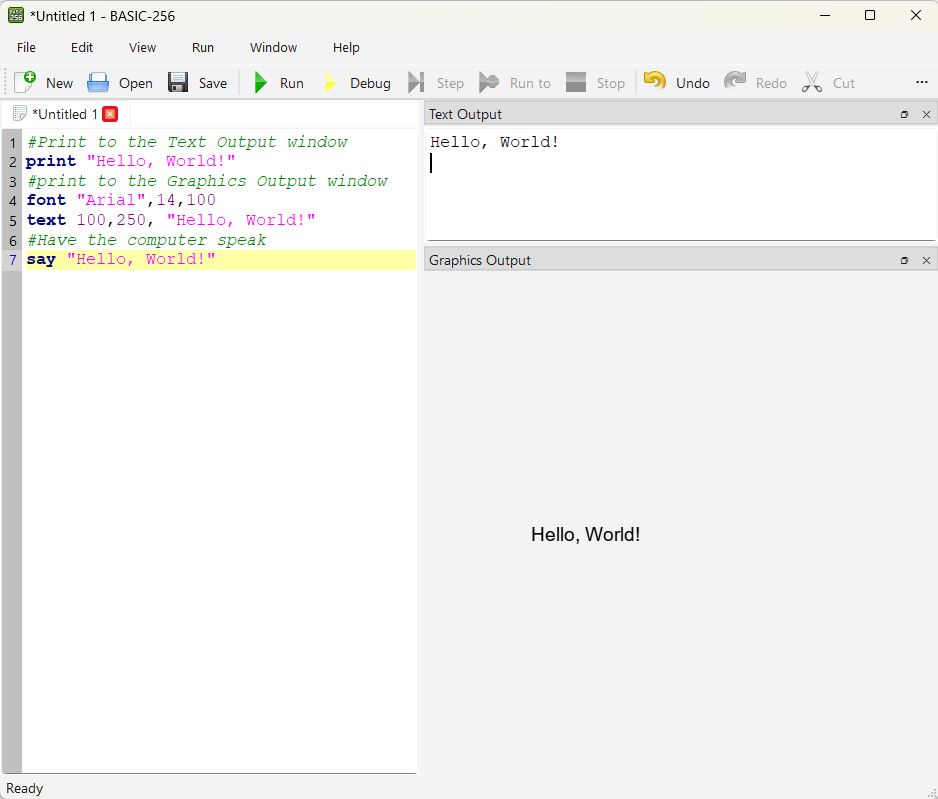
print writes to the text pane, text draws on the graphics pane, and say speaks aloud. Click to enlarge.2.0.99.10.2 branch as its starting point.Dates and attributions are drawn from the project's public history; the modern v2.1 work is documented in the repository's README and ChangeLog.
Reneau's free textbook teaches BASIC-256 from the ground up, chapter by chapter.