Fractals, simulations, physics, games and demos — all written in BASIC-256. Read the source of any of them, or run it in your browser with one click and change it yourself.
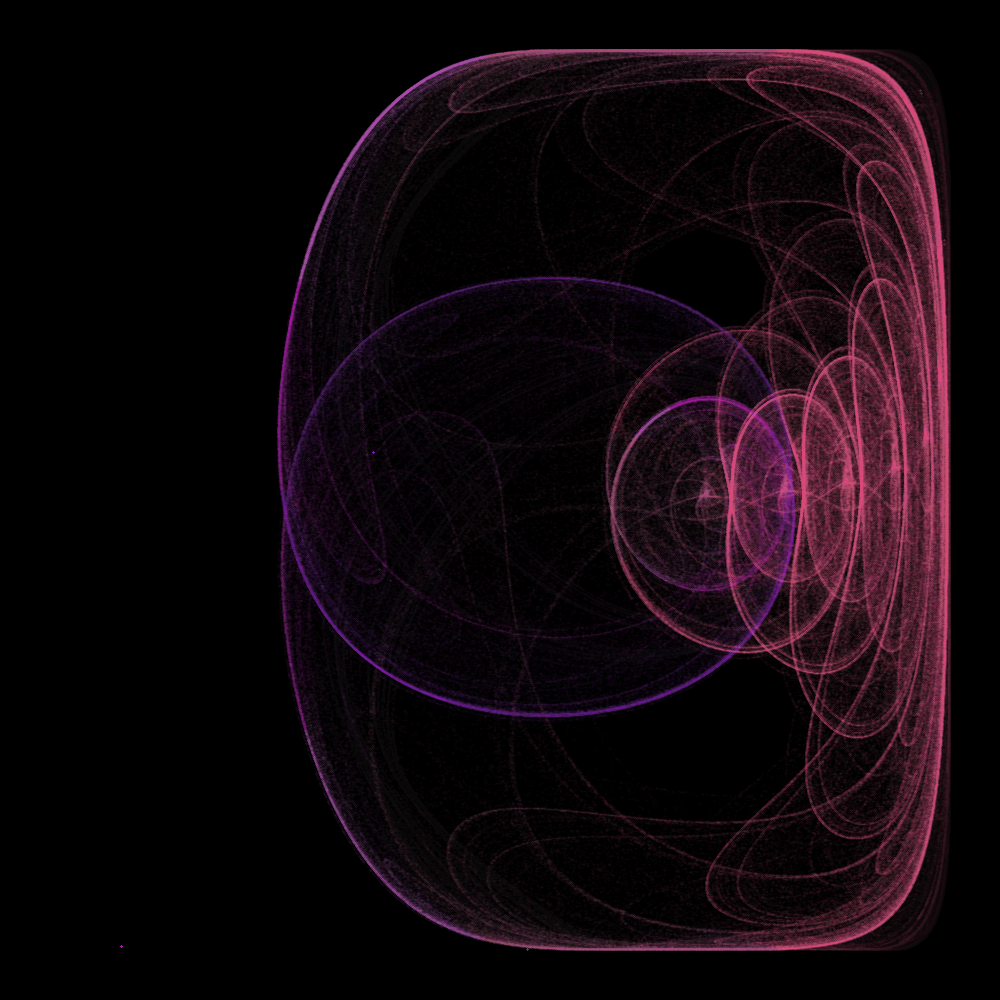
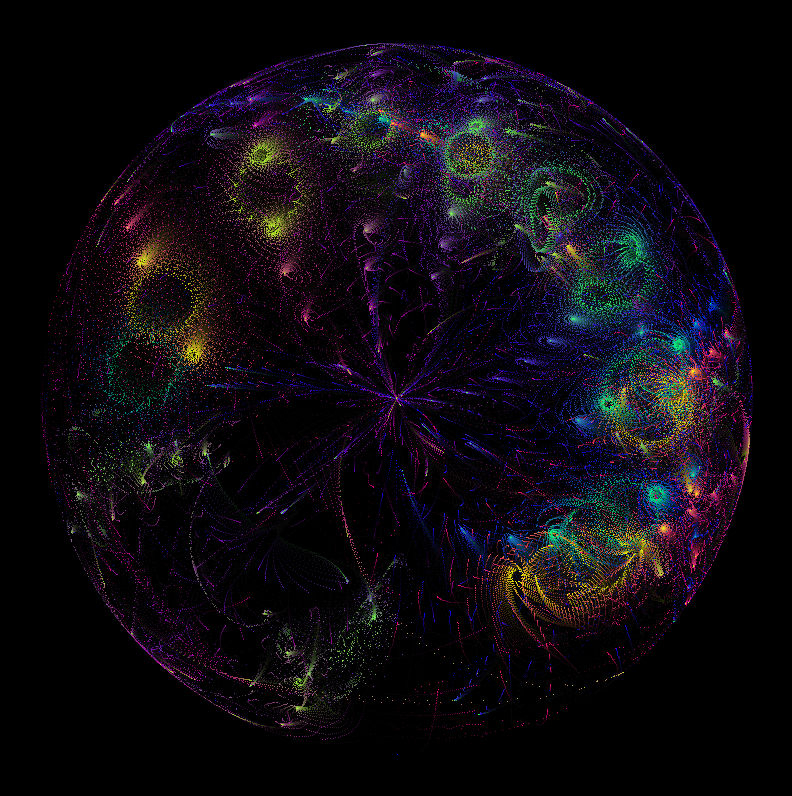
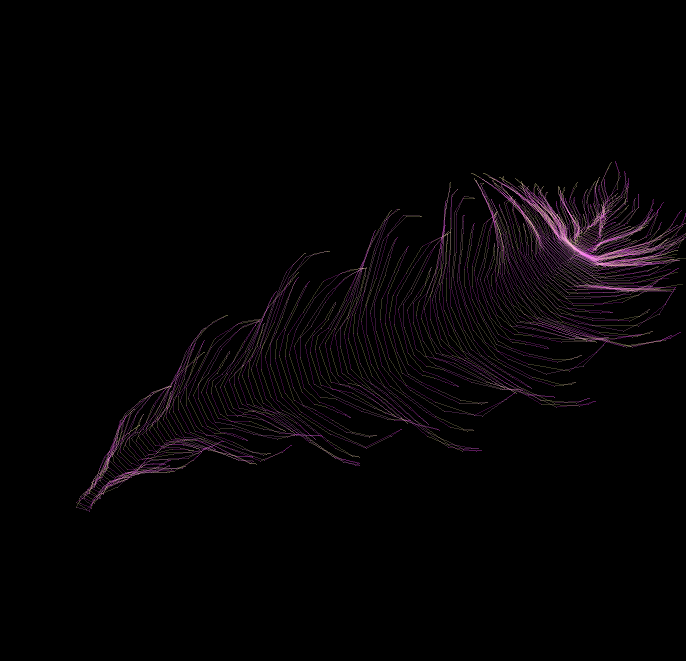
Clifford and Peter de Jong attractors. Move the mouse slowly to explore the parameter space; points visited more often glow brighter through additive blending. Click to clear the trails.
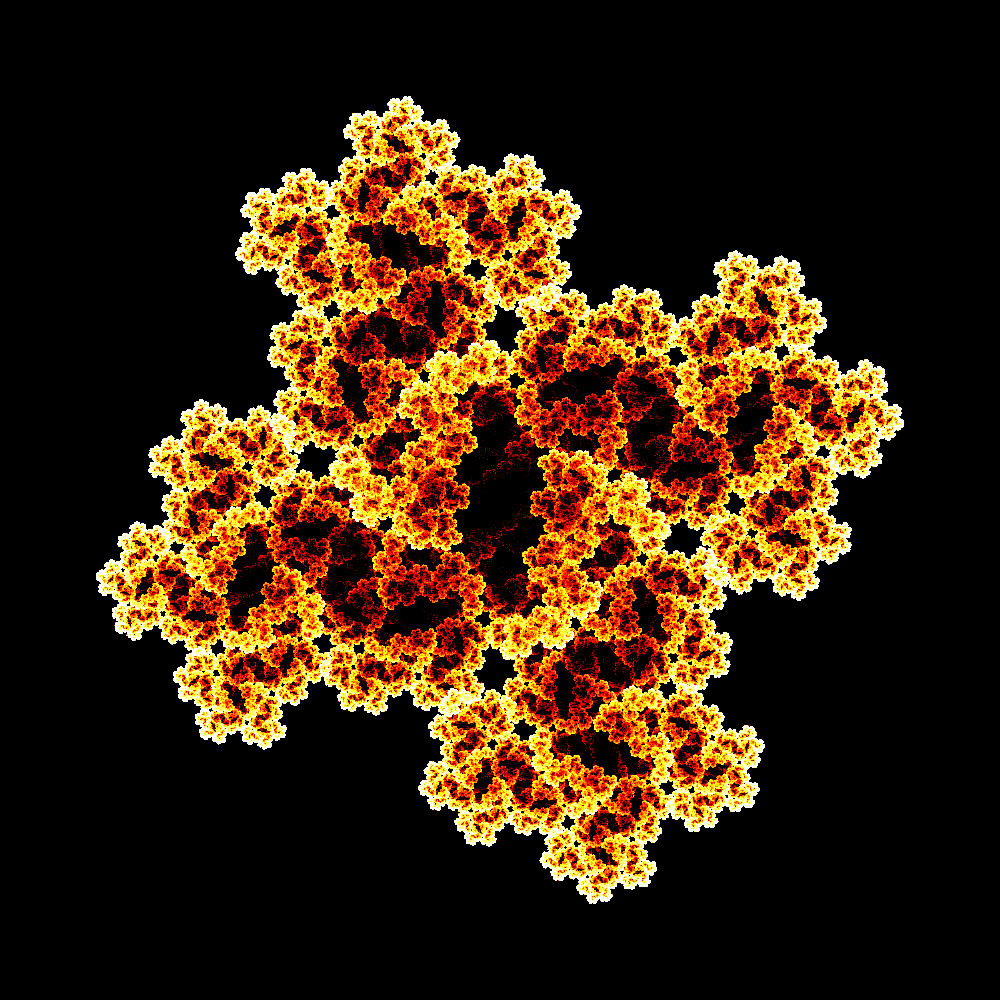
Several Julia sets combined into one iterated function system, rendered by counting how often each pixel is hit. Heavily commented, so it doubles as a walkthrough of the technique.
Particle Life: coloured particles attract or repel each other by a handful of simple rules, and cells, chains and swarms emerge. Press R for a new set of rules.
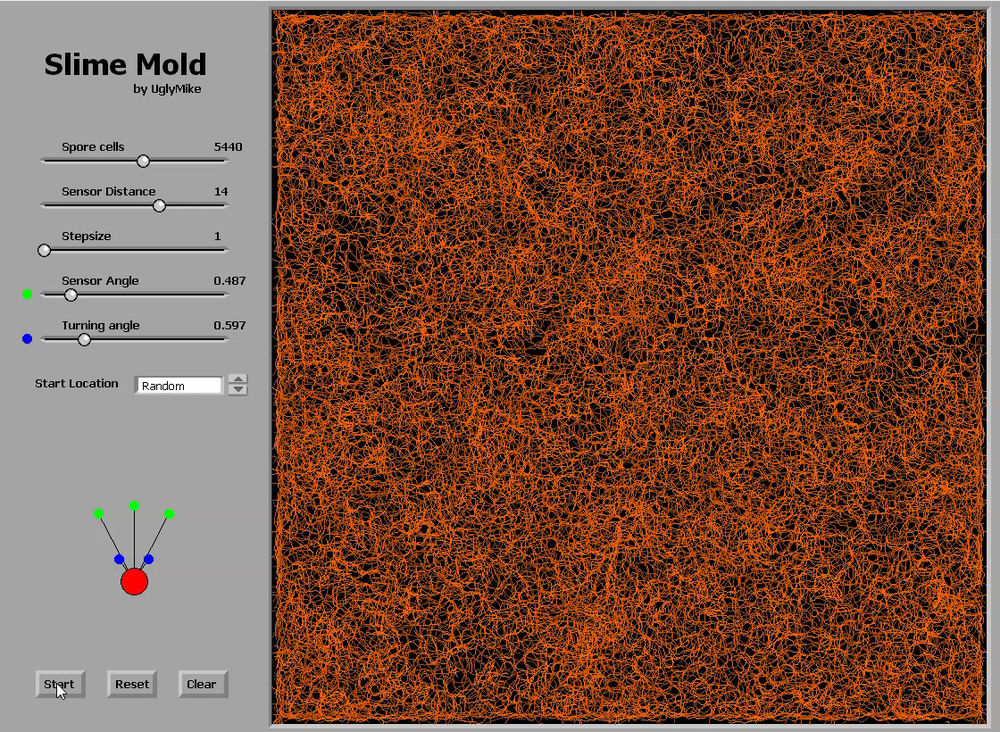
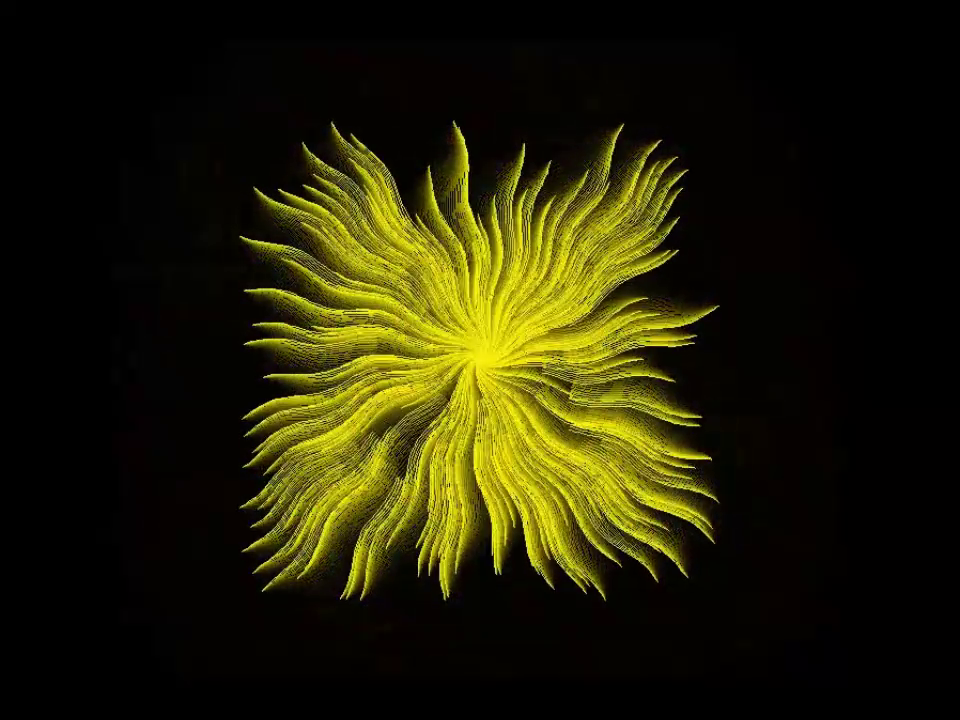
A Physarum-style slime mold simulation. Sliders change sensor distance, sensor angle, turning angle and step size while it runs, so you can watch the network reorganise.
A cloudy sky painted row by row from six layers of OpenSimplex noise, coloured with HSV. Four numbers at the top of the program set how cloudy it is, how soft the edges are, how big the clouds are and how much fine detail they have.
Verlet integration: position, previous position, and nothing else.
Physics
Verlet Balls
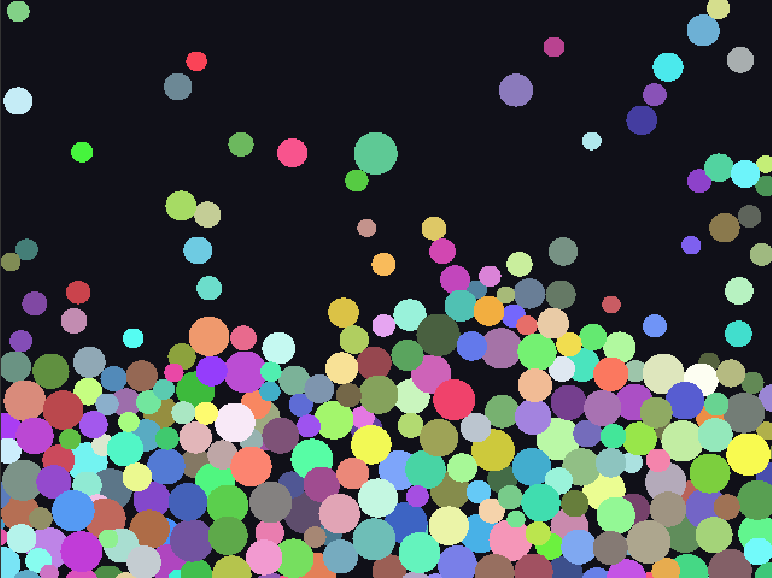
Balls of different mass under gravity and friction, colliding according to their weight. Grab one with the mouse to shove the others aside. A uniform spatial grid keeps the collision checks fast.
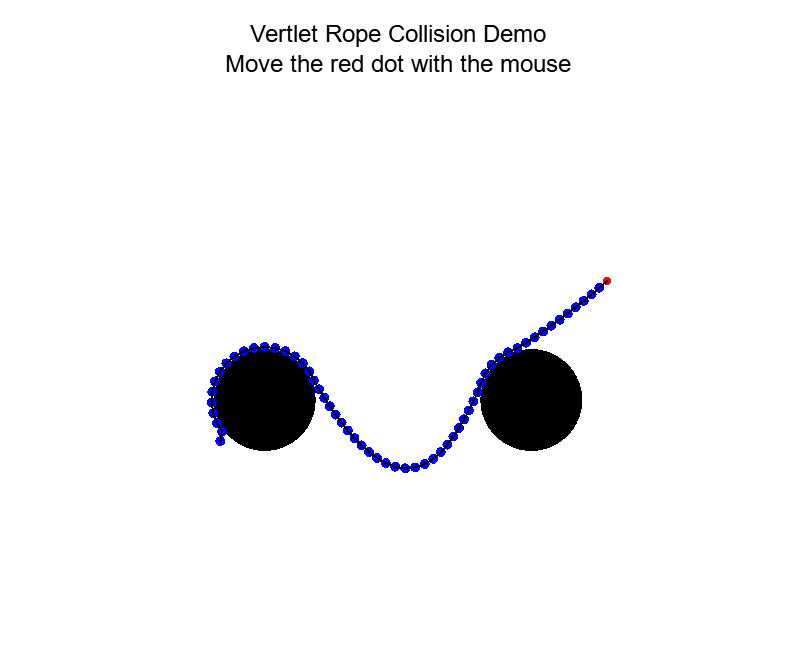
A chain of Verlet particles joined by fixed-length sticks, pinned at one end. Drag the pinned end with the mouse and the rope swings, bounces off the walls, collides with itself and wraps around two fixed discs.
A sheet of cloth built from a grid of Verlet points and constraints.
Coming soon
Physics
Double Pendulum
K Moerman
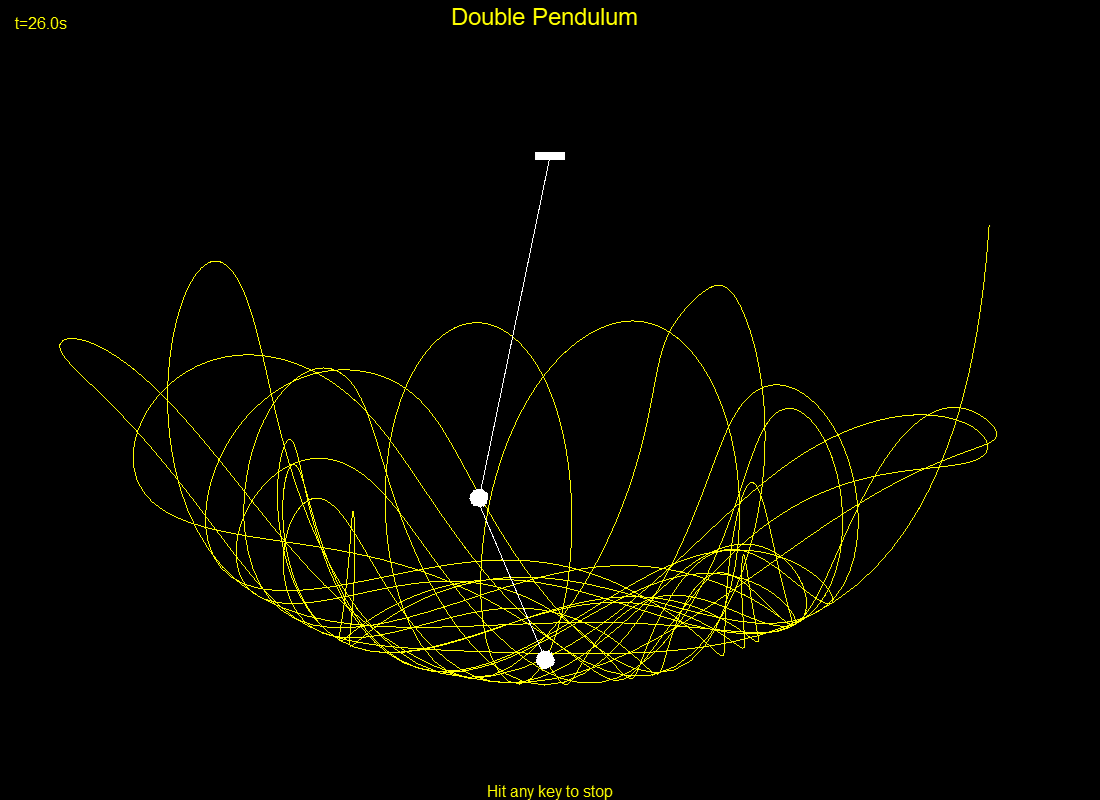
Two linked pendulums swinging under gravity with a little drag, worked out step by step from the equations of motion, while the lower weight traces its chaotic path. Any key stops it.
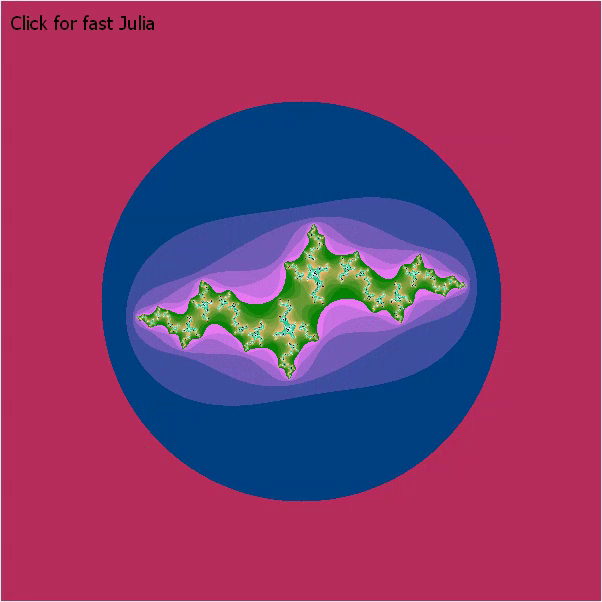
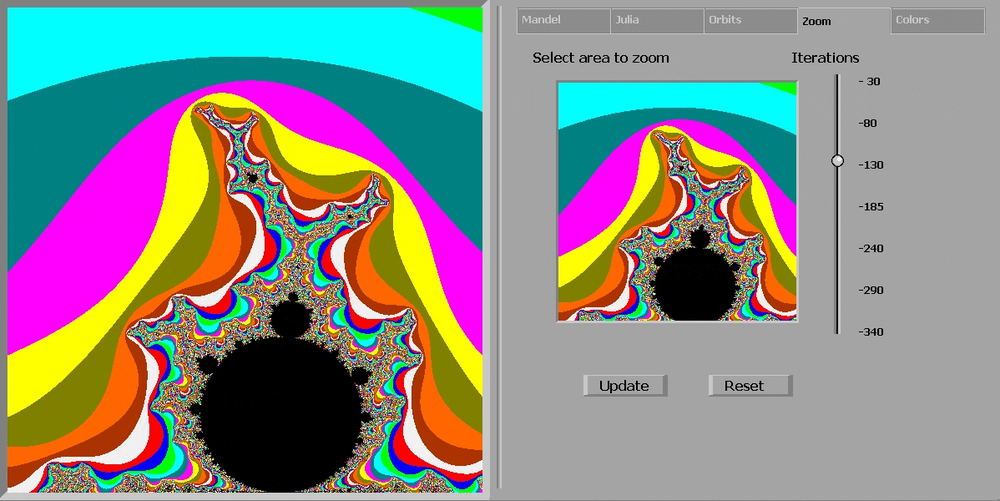
A Mandelbrot explorer with its own interface: drag out an area to zoom, set the iteration count, and hover over any point to preview its Julia set — click to render it in full.
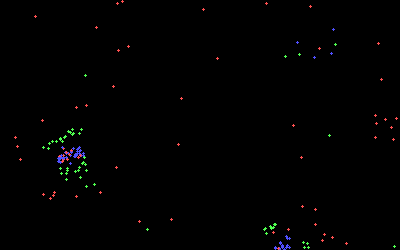
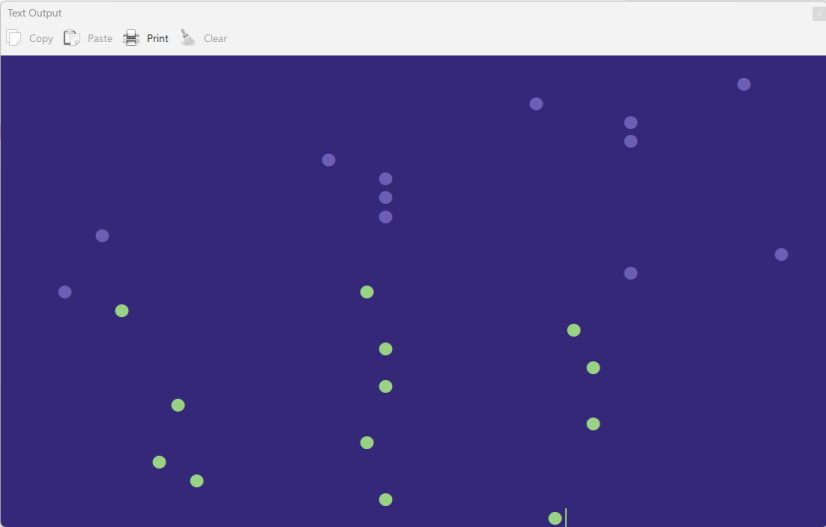
A Commodore 64 one-liner reborn on the 2.3.0 text screen: green balls push up from the bottom, blue ones rain down from the top, and the two fight over a 40×25 character grid.
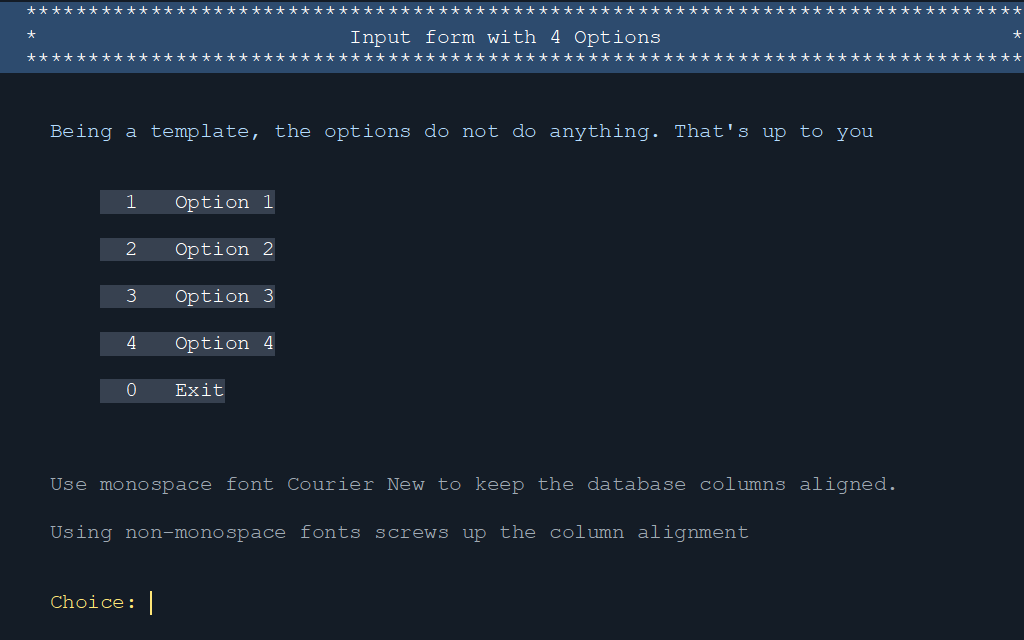
A starting point for a menu-driven text program: a coloured banner, a numbered menu and a prompt, all placed with LOCATE on a TEXTSCREEN grid. Fill in the four options with something useful.
"Run in browser" opens the program from run.basic256.org in a separate window and runs it on its own, without the editor — the first visit downloads roughly 16 MB, and a few programs need a mouse or keyboard. Programs with a run button also ship in the Examples folder of the desktop app; the others link to their source on UglyMike's Web Lair.
Make your own
Open any of these, change a number, and run it again — that is how most of them started.